
In this post, we explore practical top 10 energy saving devices for everyday use.
These devices help lower your electricity bill and reduce wasted energy at home.
With rising energy costs, using smart tools and gadgets can make a noticeable difference.
Choosing the right energy saving devices can save money and help the planet.
We cover what each device does, how it saves energy, and why it matters.
Why Use Energy Saving Devices
Energy saving devices help reduce wasted electricity and make homes more efficient.
Many homes waste energy from lights left on, devices in standby, and poor insulation.
Simple devices like LED bulbs, smart plugs, and thermostats help cut this waste.
Some devices act automatically, adjusting settings based on usage and weather.
Others show you how much energy your home uses in real time.
When you know where power is used, savings can become a daily habit.
Devices that reduce “phantom” or standby power can cut 5–10% of usage.
Energy saving devices don’t just cut bills, they lower carbon emissions too.
Small changes in how energy is used can lead to big long‑term savings.
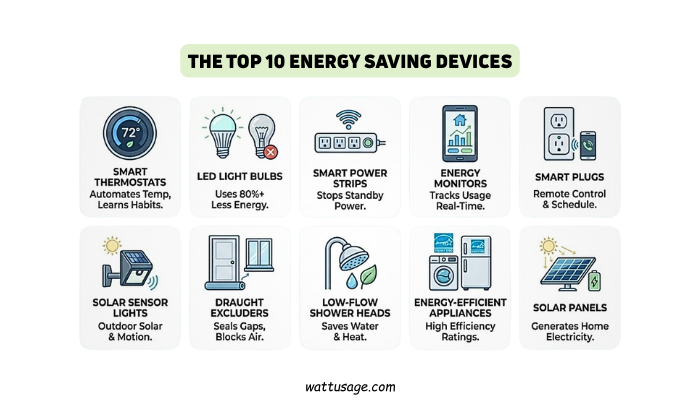
The Top 10 Energy Saving Devices
Below are the top 10 energy saving devices you can consider for your home.
1. Smart Thermostats
A smart thermostat automatically adjusts home temperature based on routine.
It learns your habits and reduces heating or cooling when no one is home.
This cuts energy use and often lowers cooling or heating bills.
Smart thermostats can be controlled remotely using an app on your phone.
They help heat only needed rooms, reducing wasted energy.
2. LED Light Bulbs
LED bulbs are one of the most effective energy saving devices.
They use up to 80–90% less energy than normal incandescent bulbs.
LEDs also last much longer than traditional bulbs, sometimes up to 25,000 hours.
Replacing old bulbs with LED bulbs quickly lowers electricity bills.
Smart LED bulbs can be scheduled to turn off when not needed. LED lighting also reduces heat inside rooms, which lowers cooling costs.
3. Smart Power Strips
Smart power strips reduce wasted energy from devices in standby mode.
Many electronics draw tiny amounts of power even when “off.”
Smart power strips cut power to these devices automatically.
They are especially useful for entertainment systems, computers, and chargers.
Using them reduces phantom energy waste that silently increases your bill.
4. Energy Monitors
Energy monitors help you see how much electricity your home uses.
They connect to your main panel and measure usage by device or circuit.
Seeing usage in real time encourages energy‑saving habits.
Knowing which devices use the most power helps you focus where savings matter. Studies suggest simply showing energy use can reduce overall use by 5–15%.
5. Smart Plugs
Smart plugs turn regular devices into controllable energy savers.
You can schedule them to turn off at night or when not in use.
They also let you monitor energy use per device through your phone.
Smart plugs help stop phantom loads from chargers, lamps, or kitchen devices.
They are inexpensive and easy to install in any outlet.
6. Solar Motion Sensor Lights
Solar motion lights are outdoor lights powered by the sun.
They use no grid electricity and only turn on when movement is detected.
This makes them efficient and eco‑friendly for gardens, paths, or porches.
They reduce outdoor lighting costs while providing security lighting.
Solar lights also lower your dependence on nighttime electricity.
7. Draught Excluders and Weatherproofing Tools
Simple draught excluders and weatherproof seals reduce heat loss in winter.
They block cold air from doors and windows, helping heating systems use less power.
Even small sealing tools can save noticeable amounts on heating bills.
In summer, they reduce cooling needs by reducing warm air entering the home.
This also increases comfort inside rooms.
8. Low‑Flow Shower Heads
Low‑flow shower heads reduce hot water use without lowering comfort.
They mix air with water to maintain strong pressure, yet use less hot water.
This saves energy used in water heating, often a major home cost.
Lower hot water use reduces electricity or gas bills.
9. Energy‑Efficient Appliances
Upgrading old appliances to energy‑efficient models greatly reduces electricity use.
Look for devices with high energy efficiency ratings.
Examples include refrigerators, washing machines, and dishwashers.
These models use optimized motors and designs to lower consumption.
While they cost more upfront, savings pay back over time.
They also reduce wear on your electrical system.
10. Solar Panels
Solar panels convert sunlight into electricity for your home.
They reduce reliance on grid electricity and lower monthly bills. (Aemaco)
Even partial solar setups offset power from major appliances.
Panels also add value to your home and reduce your carbon footprint.
Many households pair solar with battery storage for night use.
Solar energy is one of the most powerful long‑term saving tools.
Combining Devices for Maximum Savings
Using many devices together increases benefits more than using one alone.
For example, LED lighting plus smart plugs cuts both lighting and standby waste.
Energy monitors help you see where appliances use the most power.
Smart thermostats and efficient heating reduce bills a lot in winter.
Small devices like draught excluders and low‑flow shower heads add up over months.
Together, these tools reduce both total energy use and monthly costs noticeably. Reddit users often combine smart technology with simple habits to save energy.
They turn off unused devices, use smart strips, and change lighting habits.
Conclusion
The top 10 energy saving devices help lower energy costs and waste at home.
Simple upgrades like LED bulbs and smart plugs quickly reduce electricity use.
Smart thermostats and energy monitors help you understand and control usage.
Solar and efficient appliances cut larger portions of your energy bill over time.
Using these tools together makes your home more efficient and comfortable.
Small steps today save money tomorrow.
F&Qs
Q1: Do energy saving devices really reduce bills?
Yes, many devices can cut usage by 10–30% or more.
Q2: Are smart plugs worth it?
Yes, they cut phantom power and give control from your phone.
Q3: What saves the most energy?
Smart thermostats and solar panels are often the biggest savers.
Q4: Do LED bulbs make a big difference?
LEDs can use up to 90% less energy than older bulbs.
Q5: Can energy monitors reduce energy use?
Yes, seeing real data helps people cut waste daily.
