
Cost to run dehumidifier often worries people before they buy one. Cost to run dehumidifier sounds heavier than it usually is.
Moist air feels harmless, yet it quietly affects walls, health, and comfort. A dehumidifier feels like a silent helper, working while life continues.
Understanding energy cost removes fear and replaces it with clarity. This guide explains cost calmly, without pressure or sales language.
Understanding the Cost to Run Dehumidifier
Cost to run dehumidifier depends on size, hours, and room conditions. Dehumidifiers remove moisture using a compressor and fan.
These parts consume electricity steadily, not suddenly.
Small units use less power but work longer in damp spaces. Large units use more power but finish faster. Both choices balance time and energy differently.
Cost feels personal because homes breathe differently.
Average Power Consumption of Dehumidifiers
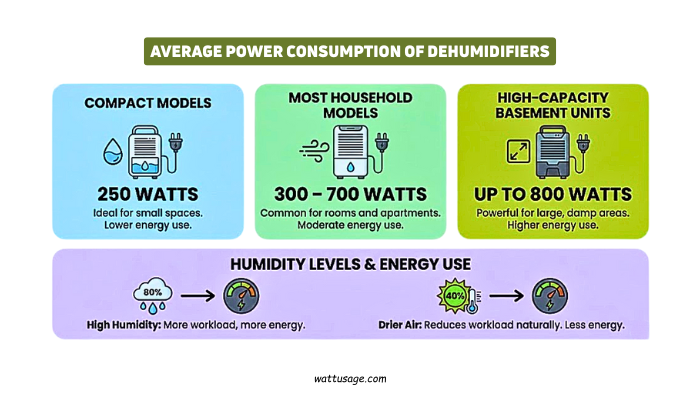
Cost in dehumidifier links closely to wattage ratings. Most household dehumidifiers use between 300 and 700 watts.
Compact models may use only 250 watts. High-capacity basement units can reach 800 watts. Energy use changes with humidity levels.
Drier air reduces workload naturally.
Daily, Monthly, and Yearly Running Cost
Cost to run dehumidifier becomes clearer with simple math. A 500-watt unit running eight hours uses four kilowatt-hours daily.
Monthly use reaches around 120 kilowatt-hours. Yearly use approaches 1,440 kilowatt-hours. At average rates, monthly cost feels manageable. Usage habits shape final bills more than wattage alone.
Cost to Run Dehumidifier Table
| Dehumidifier Size | Average Watts | Daily Use Hours | Monthly kWh | Estimated Monthly Cost |
|---|---|---|---|---|
| Small Room | 300 W | 6 hours | 54 kWh | Low |
| Medium Room | 500 W | 8 hours | 120 kWh | Moderate |
| Large Basement | 700 W | 10 hours | 210 kWh | Higher |
Actual costs depend on electricity rates.
Factors That Increase Dehumidifier Energy Cost
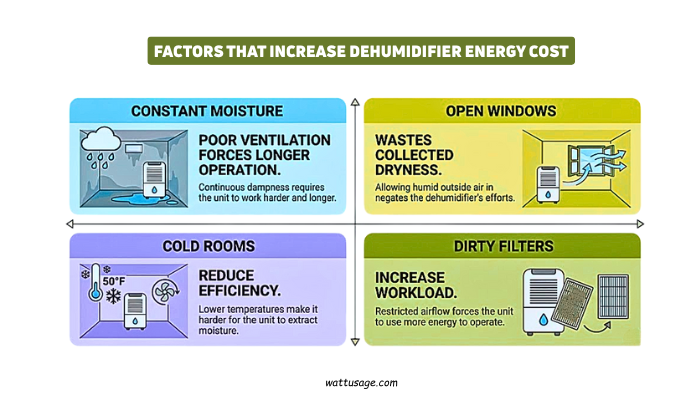
An increases with constant moisture. Poor ventilation forces longer operation.
- Open windows waste collected dryness.
- Cold rooms reduce efficiency.
- Dirty filters increase workload.
Neglected maintenance raises long-term cost.
Idle, Cycling, and Continuous Operation
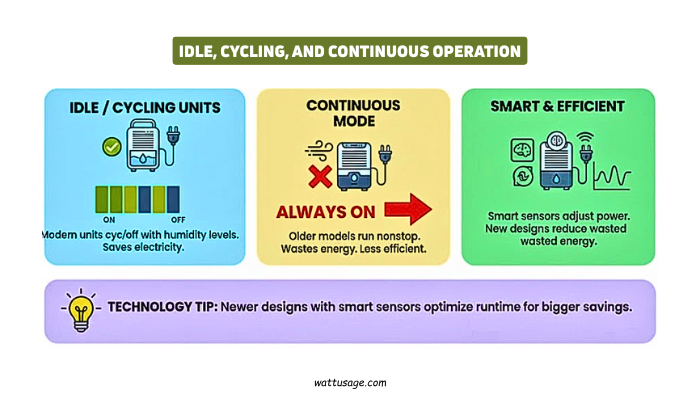
It varies with operating style. Modern units cycle off when humidity drops.
Older models may run continuously. Smart humidity sensors save electricity automatically. Choosing newer designs reduces wasted energy.
Technology quietly supports efficiency.
Dehumidifier vs Other Household Appliances
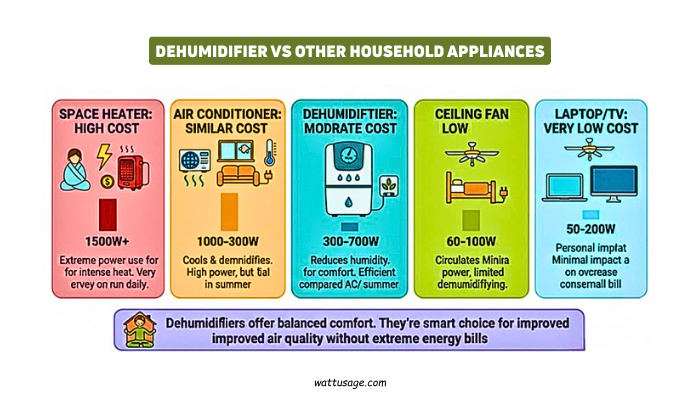
A dehumidifier feels moderate compared to heaters. Space heaters consume far more electricity. Air conditioners often use similar power.
Dehumidifiers offer comfort without extreme energy use. They sit calmly between necessity and luxury.
Health and Comfort Benefits Beyond Cost
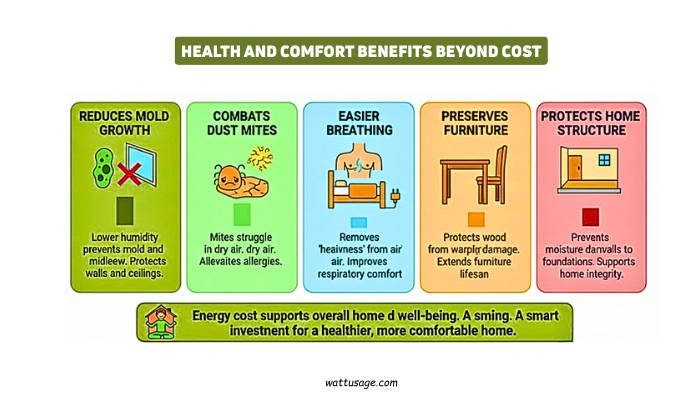
Cost to run dehumidifier should consider health benefits. Lower humidity reduces mold growth. Dust mites struggle in dry environments.
- Breathing feels easier.
- Furniture lasts longer.
- Walls stay protected.
Energy cost supports overall home well being.
Emotional Reflection on Quiet Machines
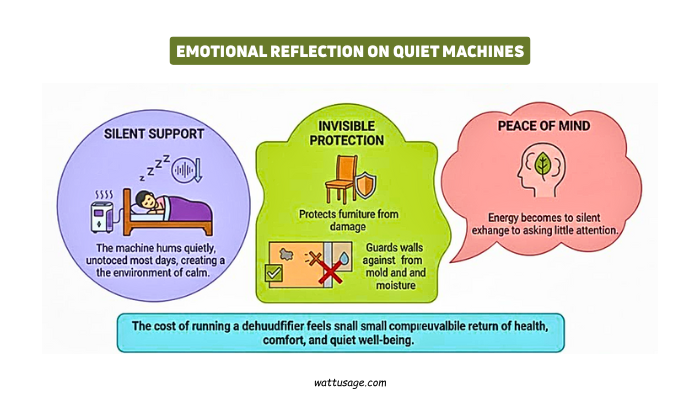
The dehumidifier feels smaller when comfort improves. The machine hums quietly, unnoticed most days.
It protects while asking little attention. Sometimes, support works best when invisible. Energy becomes a silent exchange for peace.
Tips to Reduce Dehumidifier Running Cost
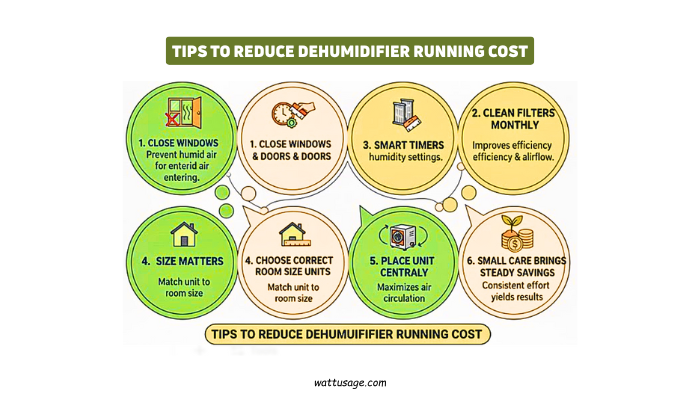
Cost to run dehumidifier lowers with mindful habits. Close windows and doors.
Use timers or humidity settings.
Clean filters monthly.
Choose correct room size units.
Place unit centrally.
Small care brings steady savings.
Choosing the Right Dehumidifier Size
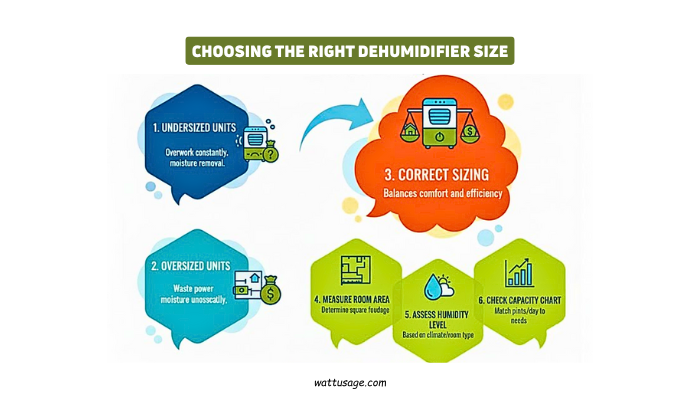
Cost to run dehumidifier rises when size mismatches room needs. Undersized units overwork constantly.
Oversized units waste power unnecessarily. Correct sizing balances comfort and efficiency.
Measurement prevents regret.
Seasonal Changes and Energy Use
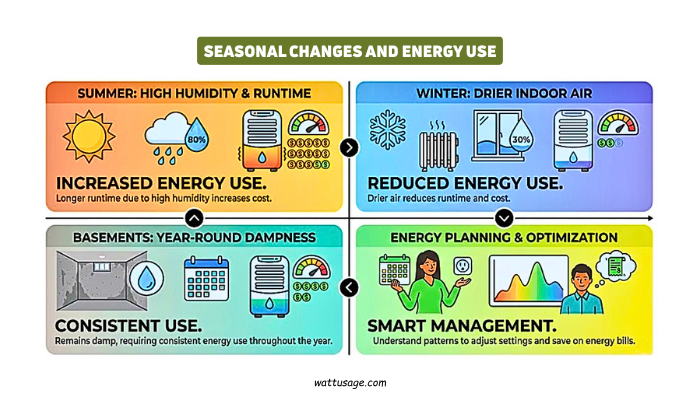
Cost to run dehumidifier changes with seasons. Summer humidity increases runtime.
Winter air often stays drier indoors. Basements remain damp year-round.
Understanding patterns improves energy planning.
Conclusion
Dehumidifier feels lighter when understood properly. Most units use moderate electricity compared to comfort gained. Usage habits matter more than machine size alone.
Mindful operation keeps bills predictable. A dehumidifier supports health, comfort, and calm living. Energy spent becomes energy saved elsewhere.
FAQs
Q1: Does a dehumidifier use electricity all the time?
No, modern units cycle based on humidity levels. Dehumidifier vs Air purifier
Q2: Is running a dehumidifier expensive monthly?
Costs stay moderate with efficient usage habits.
Q3: Can dehumidifiers replace air conditioners?
No, they serve different comfort purposes.
Q4: Does room size affect electricity cost?
Yes, incorrect sizing increases energy use.
Q5: Are Energy Star dehumidifiers worth it?
Yes, they reduce long-term electricity costs.
