
“How many kWh per day is normal?” is a question many homeowners and renters ask themselves.
Electricity usage affects bills, sustainability, and even lifestyle habits.
Understanding daily kW/h helps you manage electricity costs efficiently and avoid surprises.
Normal daily kW/h depends on household size, appliances, lifestyle, climate, and local electricity rates.
Even small changes in daily habits can save significant energy over time.
Understanding kWh
A kW/h (kilowatt-hour) measures energy usage. It represents one kilowatt of power consumed over one hour.
For example, a 100-watt light bulb running 10 hours consumes 1 kW/h. Tracking kW/h per day gives insight into energy use and electricity bills.
High kWh does not always mean waste; it can reflect comfort, work, or lifestyle needs.
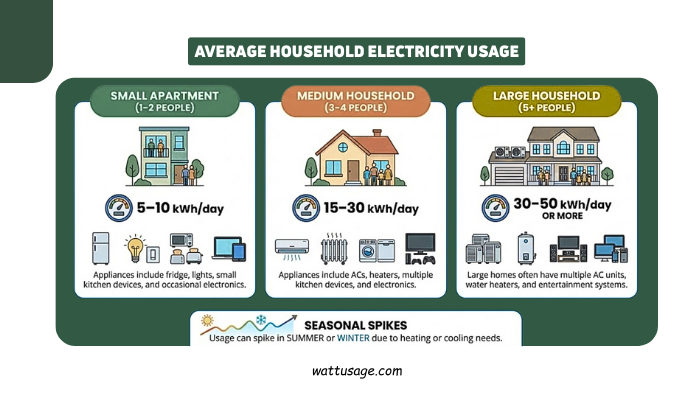
Average Household Electricity Usage
Daily electricity usage varies depending on household size and appliances.
Small Apartment (1–2 people): Typically 5–10 kWh/day.
Appliances include fridge, lights, small kitchen devices, and occasional electronics. Medium Household (3–4 people): Typically 15–30 kWh/day. Appliances include ACs, heaters, multiple kitchen devices, and electronics.
Large Household (5+ people): Typically 30–50 kWh/day or more. Large homes often have multiple AC units, water heaters, and entertainment systems.
Usage can spike in summer or winter due to heating or cooling needs.
Factors Affecting Daily kWh
Number of Appliances
More appliances naturally increase daily electricity use.
Each device draws a certain wattage, adding to total kW/hconsumed daily. Even small devices like phone chargers add up over time.
Regularly checking unused devices reduces hidden consumption.
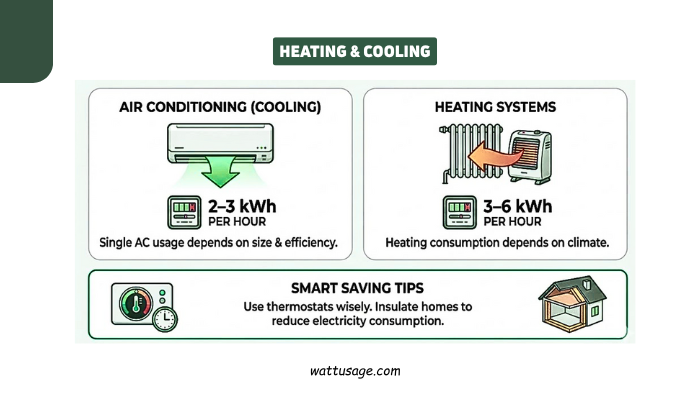
Heating and Cooling
Air conditioners and heaters are major contributors to daily kWh.
A single AC can use 2–3 kW/h per hour depending on size and efficiency. Heating systems can consume 3–6 kW/hper hour, depending on climate.
Using thermostats wisely and insulating homes reduces electricity consumption.
Lifestyle Habits
Working from home increases daily kW/hdue to computers and lighting.
Entertainment systems, gaming, and streaming add significant electricity use. Electric vehicles charged at home can add 8–20 kW/hper day.
Awareness of habits helps plan energy consumption without sacrificing comfort.
Insulation and Energy Efficiency
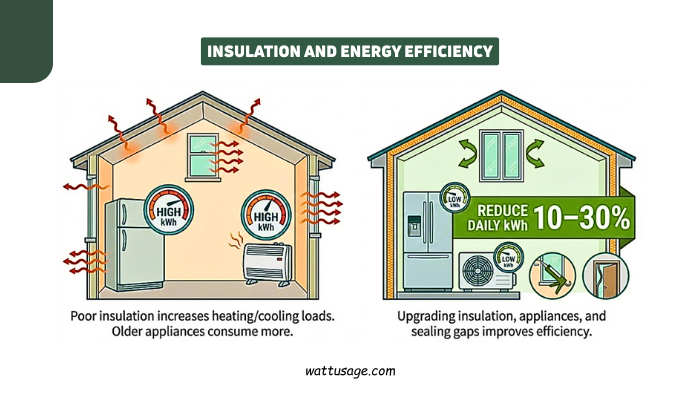
Poorly insulated homes increase heating and cooling energy usage.
Older appliances consume more electricity than newer, energy-efficient models. Upgrading insulation and appliances can reduce daily kW/hby 10–30%.
Simple measures like sealing windows and doors improve energy efficiency.
Example of Daily kWh Usage in a Medium Household
| Appliance | Power (Watts) | Daily Use (hours) | kWh/day |
|---|---|---|---|
| Fridge | 150 W | 24 | 3.6 kWh |
| Lights | 10×10 W | 5 | 0.5 kWh |
| Washing Machine | 500 W | 1 | 0.5 kWh |
| Microwave | 1000 W | 0.5 | 0.5 kWh |
| AC | 2000 W | 5 | 10 kWh |
| TV | 150 W | 4 | 0.6 kWh |
| Computer | 200 W | 6 | 1.2 kWh |
| Total | ~16–17 kWh/day |
This table illustrates how appliances combine to form a household’s total daily consumption.
Small changes in timing, usage, and efficiency can reduce kW/hnoticeably.
Seasonal Variations
Electricity usage is rarely constant throughout the year.
- Summer: AC units, fans, and cooling devices increase daily kW/h.
- Winter: Heaters, water heaters, and indoor lighting increase consumption.
- Spring and Fall: Moderate weather reduces heating and cooling needs, lowering kWh.
Planning around seasons helps save energy and money.
Electricity Costs Based on Daily kWh
To calculate electricity cost:
- Daily kWh × electricity rate = daily cost
- Example: 16 kWh/day × $0.15/kWh = $2.40/day
- Monthly cost: 2.40 × 30 ≈ $72/month
- Yearly cost: 72 × 12 ≈ $864/year
Using energy-efficient appliances and mindful habits can reduce these costs by 10–30%.
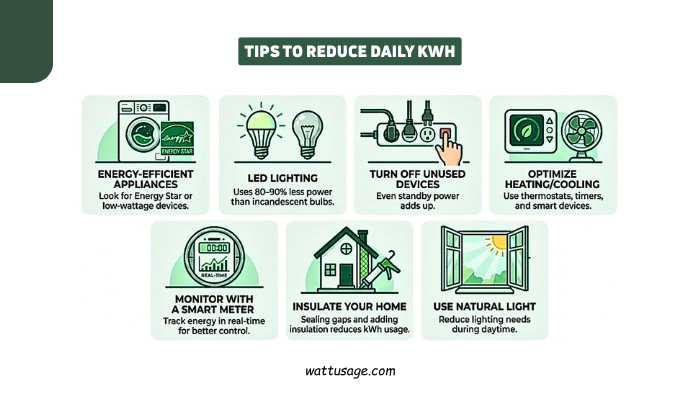
Tips to Reduce Daily kWh
- Energy-efficient appliances: Look for Energy Star or low-wattage devices.
- LED lighting: Uses 80–90% less power than incandescent bulbs.
- Turn off unused devices: Even standby power adds up.
- Optimize heating/cooling: Use thermostats, timers, and smart devices.
- Monitor with a smart meter: Track energy in real-time for better control.
- Insulate your home: Sealing gaps and adding insulation reduces kW/h usage.
- Use natural light: Reduce lighting needs during daytime.
Reflection on Energy Use
Tracking daily kWh is more than numbers; it is about conscious living.
It helps balance comfort, convenience, and cost without unnecessary electricity waste. Small lifestyle changes compound into significant savings over months and years.
Energy awareness encourages sustainable habits for the future.
Conclusion
Normal daily kW/h depends on household size, appliances, lifestyle, and climate.
- Small apartments: 5–10 kW/h
- Medium homes: 15–30 kW/h
- Large homes: 30–50 kW/h
Tracking kWh helps manage bills, plan energy use, and reduce waste.
Simple habits like turning off unused devices, using efficient appliances, and insulating homes make a noticeable difference.
Electricity awareness is not only about saving money but about creating sustainable and mindful living.
FAQs
Q1: What is normal daily electricity use?
Depends on household size: small apartments 5–10 kWh, medium 15–30 kWh, large 30–50 kWh.
Q2: How can I reduce my daily kWh?
Use energy-efficient appliances, LEDs, smart meters, and turn off unused devices.
Q3: Does insulation affect daily electricity use?
Yes, poor insulation increases heating and cooling energy needs, raising daily kWh.
Q4: Can seasonal changes affect daily kWh?
Yes, summer AC and winter heating significantly increase electricity use.
Q5: Does lifestyle impact daily kWh?
Yes, working from home, electric vehicles, gaming, and entertainment increase daily consumption.
