
When you ask, How Many Watts Does a Sewing Machine Use, electricity often comes to mind immediately. Most people assume sewing machines consume a lot of power, but the truth is surprisingly low. Knowing this helps hobbyists, tailors, and households plan electricity costs wisely.
Modern sewing machines are designed to be energy-efficient while providing smooth and precise operation.
This post explores wattage, daily energy use, cost calculations, types of machines, and tips for saving electricity.
How Many Watts Does a Sewing Machine Use:
How Many Watts Does a Sewing Machine Use depends on motor type, machine model, and usage hours. Older mechanical machines usually draw less power, around 50–100 watts, for simple sewing tasks. Electronic or computerised machines with advanced features use 70–200 watts, depending on operation.
Even with built-in lights, speed control, and automatic features, electricity use is modest.
Knowing this also helps prevent overestimating electricity bills. Average daily use of 1–2 hours consumes very little, usually less than a kilowatt-hour per week. This makes sewing machines affordable in terms of electricity, even for daily users.
Factors Affecting Sewing Machine Wattage
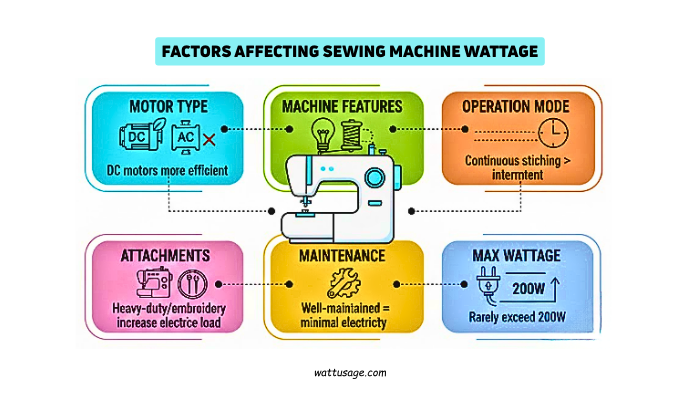
- Motor Type: DC motors are more energy-efficient than AC motors.
- Machine Features: Automatic threading, lighting, and speed control increase energy slightly.
- Operation Mode: Continuous stitching uses more power than short or intermittent use.
- Attachments: Heavy-duty or embroidery attachments may increase motor load.
- Maintenance: Well-maintained machines operate smoothly, using minimal electricity.
Even high-end sewing machines rarely exceed 200 watts during operation.
It can vary depending on model and specific usage patterns. Proper maintenance ensures efficient operation, preventing excess electricity consumption.
Daily, Monthly, and Annual Electricity Use
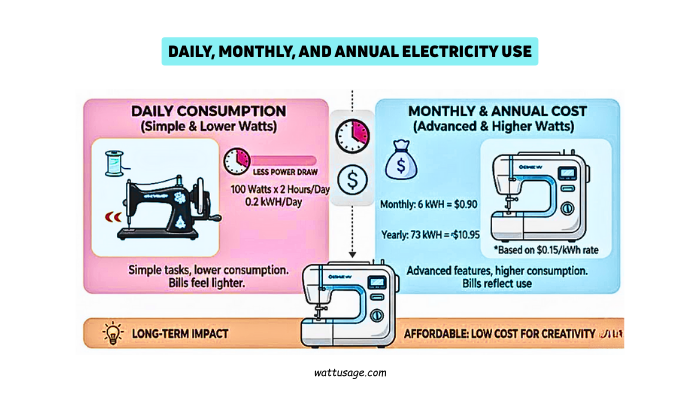
Example:
- Standard electronic sewing machine: 100 watts × 2 hours/day = 0.2 kWh/day.
- Monthly: 0.2 × 30 = 6 kWh
- Yearly: 0.2 × 365 = 73 kWh
At $0.15/kWh electricity rate:
- Monthly cost: $0.90
- Annual cost: ~$10.95
Even for heavy users sewing 4 hours daily, cost remains low. However, it proves sewing is affordable and electricity-efficient.
Sewing Machine Wattage Comparison Table
| Machine Type | Power (Watts) | Daily Use (2 hours) | Monthly kWh | Annual Cost ($) |
|---|---|---|---|---|
| Mechanical Basic | 50 W | 0.1 kWh | 3 kWh | 0.45 |
| Standard Electronic | 100 W | 0.2 kWh | 6 kWh | 0.90 |
| Advanced Computerized | 150 W | 0.3 kWh | 9 kWh | 1.35 |
| Heavy-duty Industrial | 200 W | 0.4 kWh | 12 kWh | 1.80 |
This table shows how How Many Watts Does a Sewing Machine Use varies by model and features. Even industrial machines with powerful motors have minimal impact on electricity bills compared to kitchen appliances.
Tips to Reduce Electricity Use
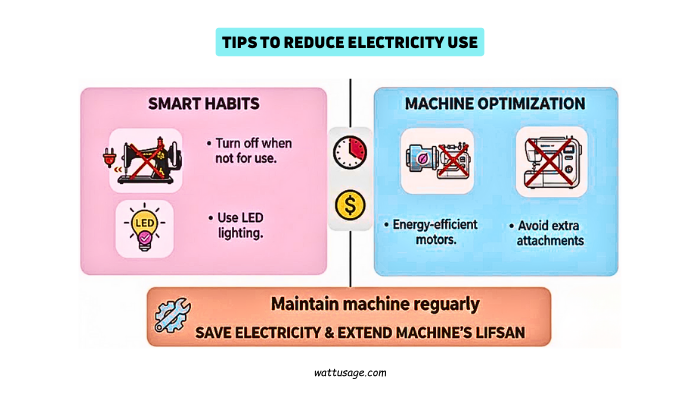
It can be reduced with simple habits:
- Turn off the machine when not in use.
- Use LED lighting instead of built-in incandescent bulbs.
- Choose machines with energy-efficient motors.
- Avoid unnecessary attachments unless needed for the project.
- Maintain the machine regularly for smooth operation and low power draw.
These steps save electricity and extend the machine’s lifespan.It is manageable with careful use and maintenance.
Industrial vs Home Machines
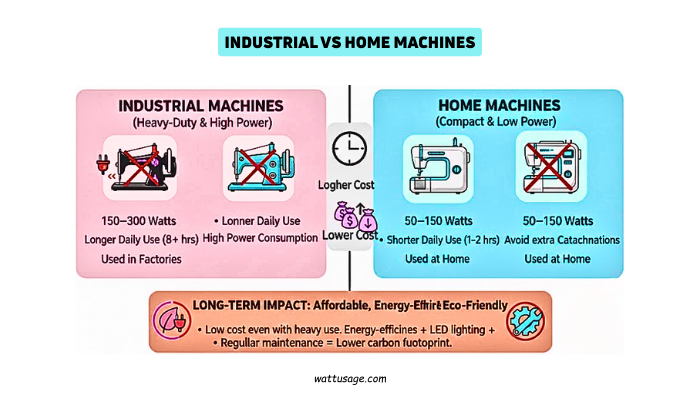
It differs between industrial and home models. Industrial machines often have motors 150–300 watts, running longer hours per day. Home sewing machines are usually 50–150 watts and operate only a few hours daily.
Even with heavy usage, electricity cost remains small compared to overall household bills.
Understanding this difference helps choose the right machine without worrying about energy consumption. We can also relate to energy efficiency and environmental impact.
Using energy-efficient machines reduces overall electricity consumption and lowers carbon footprint. Switching to LED or energy-efficient lighting with sewing machines saves additional electricity. Regular maintenance ensures motors do not overwork, further conserving energy. It is minimal, making sewing a green hobby or profession.
Conclusion
Understanding this makes sewing practical and affordable. Most home machines consume 50–150 watts, industrial machines 150–200 watts.
Daily usage of 1–2 hours costs less than $1 monthly. Simple habits, efficient lighting, and maintenance reduce electricity use further.
Sewing remains an energy-efficient hobby or business activity, suitable for home or professional use.
F&Qs
Q1: Does machine type affect electricity use?
Yes, mechanical machines use less power than electronic or computerised machines.
Q2: How much does sewing cost per year?
Most home machines cost under $11 annually, even with daily use.
Q3: Do attachments increase power usage?
Yes, embroidery or heavy-duty attachments slightly increase motor load.
Q4: Can LED lighting reduce electricity use?
Yes, replacing built-in incandescent lights with LED reduces energy consumption.
Q5: Does maintenance affect wattage?
Absolutely, well-maintained machines operate efficiently, consuming less electricity.
