
The toaster is one of those humble appliances that rarely gets the spotlight. It doesn’t roar like an air conditioner or hum like a refrigerator. It doesn’t fill the house with noise like a washing machine. Instead, it quietly stands on the kitchen counter, waiting for its brief moment each morning to turn plain slices of bread into golden, crispy comfort. But the question remains:
How much does an average toaster spend?
On average, a toaster consumes between 800 and 1,500 watts when in use. Most models fall around 1,200 watts. Now, unlike a refrigerator or even a microwave, a toaster only runs for a very short time usually 2 to 5 minutes per session.
Let’s do the math:
- If you toast bread for 5 minutes a day at 1,200 watts, that equals about 0.1 kWh daily.
- Over a month, that’s roughly 3 kWh.
- At a cost of $0.15 per kWh, your toaster only adds about $0.45 a month to your electricity bill.
Surprising, isn’t it? For all the warmth and joy it brings in the morning, the toaster spends less than a cup of coffee in cost. It’s one of the least expensive appliances to run in the entire kitchen.
But here’s the diary thought: the toaster may not spend much electricity, but it spends something else ritual. For many households, the smell of toasted bread in the morning is the unofficial alarm clock. It signals the start of a new day, a moment of routine, a piece of ordinary life that feels oddly comforting.
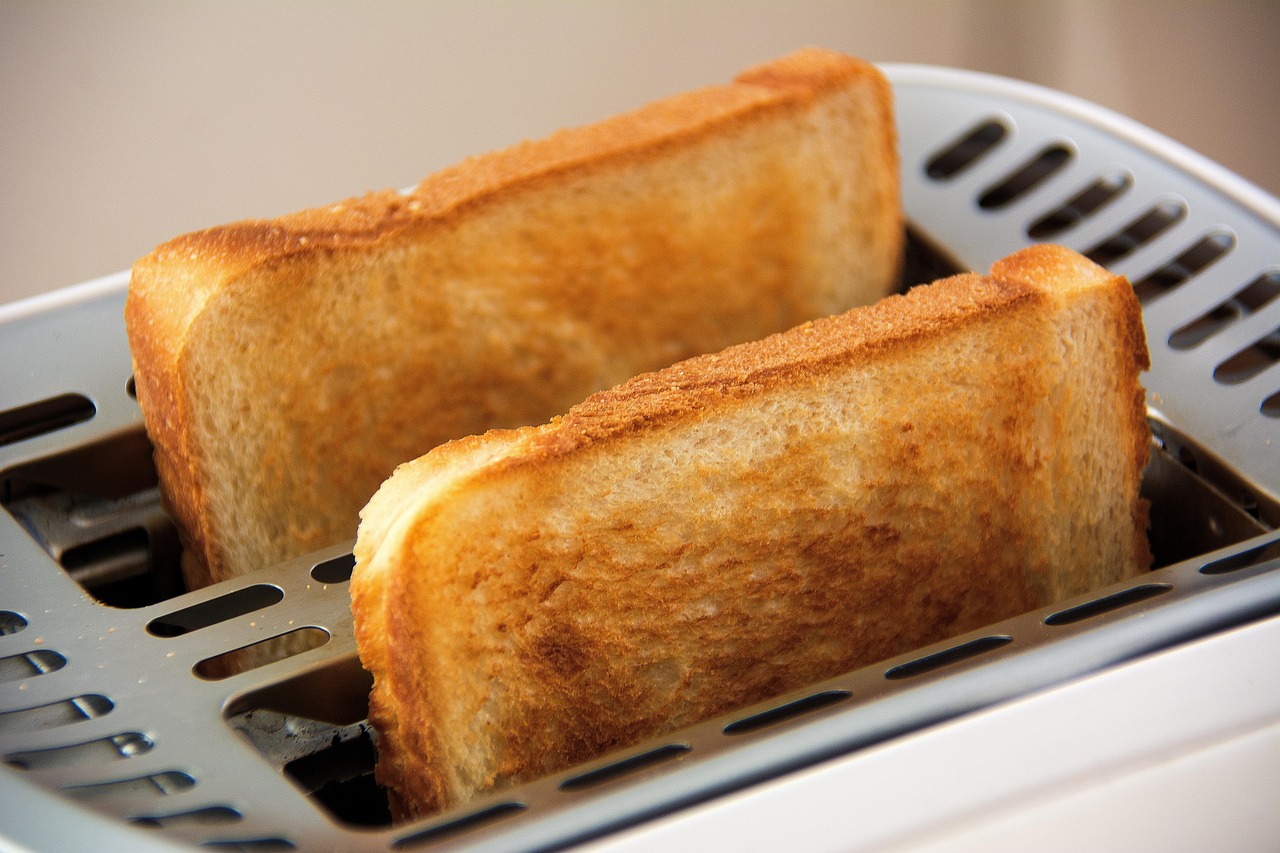
I remember during my college years, rushing through mornings with barely enough time to breathe, yet never skipping that quick piece of toast. The toaster stood like a loyal friend, always ready, never demanding much, and never failing to deliver. It was dependable, economical, and almost invisible in its service.
Still, small habits can make it spend even less. For instance, avoid toasting frozen bread directly let it thaw slightly so the toaster doesn’t run longer than needed. Clean the crumb tray regularly, because accumulated crumbs can make the machine less efficient and even a fire hazard. And if you often toast large batches, consider a toaster oven instead it might save time and energy by handling multiple slices at once.
From a global perspective, even the toaster’s tiny electricity use adds up when multiplied across millions of households. Yet compared to energy-hungry appliances like ACs or dryers, the toaster’s footprint is almost negligible. That’s why I often see it as a lesson: sometimes the quietest helpers in life give the most without taking much in return.
In my diary, the toaster is more than a machine it’s a symbol of small joys. It spends very little energy, but it delivers warmth, comfort, and routine. Its value is far greater than the watts it consumes. And maybe that’s the real story: not everything in life has to spend big to give big. Sometimes, the simplest tools, like a toaster, remind us that consistency, reliability, and a little heat are enough to brighten an entire morning.
Tips for energy efficient flow
There are many tips on many sites but i would suggest only three and why? let me answer that:
Low watt usage:
Use a low watt toaster because toaster an appliances used at different timings but multiple times, in your house one might have early timings for offices so another might have different timings, therefore you can’t limit yourself from both the usage and timings.
The only way to us it energy efficient is to bring a small one because the reason is the same you cant limit yourself from both timing and usage. So I prefer to limit your device that will allow you to use multiple times.
Limit full Capacity:
Many toasters has full scale capacity for many slices therefore when you limit it the load decreases accordingly. Manly we don’t need many slices at once what is the point of multiple slices at once.
If your toaster can handle more than one slice at a time, make the most of its capacity toast multiple slices together to avoid using extra cycles.
Batch Cycling:
When making toast for several people, run consecutive batches to keep the toaster warm and reduce the energy wasted on reheating between cycles. This approach supports sustainability and promotes energy-efficient usage, as it prevents the toaster from cooling down between rounds, ensuring consistent performance and less power consumption overall.
Annual Table:
| Usage Scenario | Power Rating (Watts) | Average Toasting Time per Use | Uses per Day | Annual Energy Use (kWh) | Avg. Cost per kWh | Estimated Annual Cost |
|---|---|---|---|---|---|---|
| Standard Usage (No Efficiency) | 1,200W | 5 min (0.083 hr) | 2 | 72.8 | $0.15 | $10.92 |
| Low Watt Toaster (800W) | 800W | 5 min (0.083 hr) | 2 | 48.6 | $0.15 | $7.29 |
| Batch Toasting | 1,200W | 10 min (0.167 hr) | 1 | 73.0 | $0.15 | $10.95 |
| Full Capacity Toasting | 1,200W | 5 min (0.083 hr) | 1 | 36.5 | $0.15 | $5.48 |
| Eco Routine (Combined Efficiency Habits) | 800W | 5 min (0.083 hr) | 1 | 24.3 | $0.15 | $3.65 |
Wanna know about some mama’s hacks, here we go just one click away.
Toaster wattage
The wattage of a toaster isn’t a fixed number, it changes depending on the brand, size, and model. On average, most toasters run around 1100 watts, but the exact figure is best confirmed by checking the user manual or product specs.
A standard 2-slice toaster usually sits in the 800–1000 watt range, though small variations exist based on design and efficiency.
If you have a 1500W inverter, it can comfortably handle a typical 1100W toaster. Just make sure the toaster’s maximum wattage doesn’t exceed the inverter’s limit.
And yes, a higher-wattage toaster generally toasts faster. More watts mean more heat in less time. That said, toasting speed also depends on the toaster’s build and settings.
How to Calculate Toaster Electricity Cost
Here is a simple way through which you can find it!
Find energy per cycle
Example: your toaster uses 0.06 kWh per cycle.
Multiply by your electricity rate
Cost per cycle = 0.06 kWh × $0.13 = $0.0078 per use
Scale it up for daily or monthly use
Daily: $0.0078 × number of uses per day
Monthly: Daily cost × 30
Example: if you toast 3 times a day:
Daily cost = $0.0078 × 3 = $0.0234
Monthly cost = $0.0234 × 30 = $0.70
“Why Wattage Isn’t Everything”:
At first glance, wattage seems like the ultimate measure of an appliance’s power. After all, 960 watts is 960 watts, right? Not exactly. Let’s take a toaster as an example:
Suppose you have a 120V, 8A, 960W toaster. Simple math tells us its internal resistance is around 15 ohms. Now, imagine you supply it with a much higher voltage 240V and think, “No problem, I’ll just add a resistor to bring the current down to 4A and keep the wattage the same.” Sounds reasonable? Not quite.
Here is why:
The resistor dilemma:
To cut the current in half, you’d need a resistor equal to the toaster’s own resistance about 15 ohms. But here’s the catch: that resistor would have to dissipate the same 960 watts as the toaster itself. In practical terms, that’s like adding a space heater just to protect your toaster. Not exactly convenient.
Voltage isn’t just a number:
Doubling the voltage across a purely resistive load like a toaster doesn’t just double the wattage, it doubles the current through the toaster. The heating elements are designed for a certain voltage. Push more, and they overheat and melt.
Wattage alone doesn’t guarantee safety:
Even if you could “trick” the toaster into consuming the same wattage with extra resistance, the distribution of voltage and current matters. Appliances are designed for specific voltages, and ignoring that can damage them, regardless of total power consumption.
Conclusion
The humble toaster may use only a tiny fraction of your electricity, but it teaches a bigger lesson: energy efficiency isn’t just about watts it’s about how, when, and why you use power.
A low-watt toaster, smart batch toasting, and using full capacity can cut costs without changing your morning routine.
At the same time, wattage alone doesn’t tell the full story. Voltage, current, and appliance design are just as important. You can’t just “trick” a toaster into working safely on the wrong voltage, even if the total power seems right. Safety and performance depend on respecting the device’s intended design.
In the end, the toaster reminds us of a quiet truth: small, consistent actions whether in energy use or daily routines deliver the most value.
It spends little electricity, yet gives warmth, comfort, and reliability every single day. Sometimes, the simplest tools teach the biggest lessons.
F&Qs
Does a higher-wattage toaster always mean better performance?
Not necessarily. Higher wattage can toast faster, but design, settings, and build quality matter just as much. Wattage alone doesn’t guarantee the best results.
How much does a toaster really cost to run?
Surprisingly little! A typical toaster uses less than a cup of coffee in electricity per month around $0.45–$0.70, depending on usage and your electricity rate.
Can I use a resistor or higher voltage to “trick” a toaster into the same wattage?
No. Voltage and current matter as much as wattage.
Using higher voltage can melt the heating elements, and a resistor would need to handle huge power safely practically a space heater. Safety comes first.
I hope these tips and insights help you save energy, stay safe, and make the most out of your toaster in your household. Sometimes, small changes and simple awareness can make a big difference!
Ahsan – Your Author & Household Hacks Helper

Great work!
Thanks for appreciation, Ali.